Integrating the Online Payment Icon into Modern Web Design and Digital Workflows
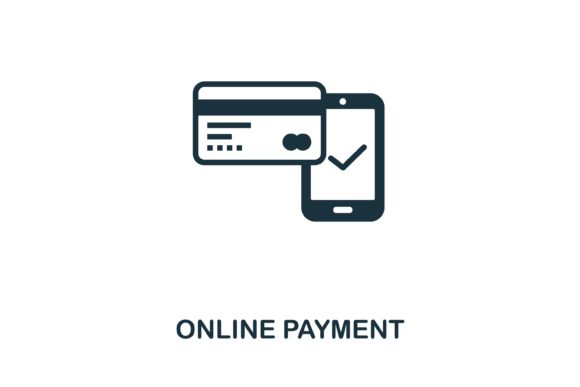
As digital transactions become increasingly central to business operations and user experiences, visual representation of payment processes plays a crucial role in communication and usability. The Online Payment Icon serves as a clear, recognizable symbol that supports seamless navigation, enhances user trust, and aligns with modern design standards. Whether used in a web design project, marketing template, or data visualization, this monochrome icon offers flexibility and clarity across platforms.
At its core, the Online Payment Icon is more than just a visual element—it's a functional asset that simplifies communication around financial interactions. Designers, developers, marketers, and entrepreneurs can all benefit from incorporating this icon into their digital materials, especially when consistency and clarity are essential.
Understanding the Role of the Online Payment Icon
The Online Payment Icon is part of a broader set of digital service symbols designed to convey specific functions in a universally understandable way. As a monochrome vector graphic, it is scalable without loss of quality, making it suitable for a variety of screen sizes and resolutions. This adaptability supports its use in responsive web design, mobile interfaces, and print materials alike.
From a workflow perspective, this icon can be integrated into multiple stages of a project. During the planning phase, it can be used to represent payment functionality in wireframes or mockups. In the development stage, it becomes a visual cue within user interfaces. Post-launch, it may appear in documentation, infographics, or marketing materials to indicate transaction capabilities.
Using the Online Payment Icon Across Digital Projects
This icon is particularly valuable in environments where visual shorthand improves comprehension. For instance, in an e-commerce platform, the icon can be placed near checkout buttons, subscription options, or billing settings. It helps users quickly identify where financial actions occur, reducing cognitive load and improving the overall user experience.
- In web design projects, the icon can be embedded directly into HTML or CSS, ensuring visual consistency across pages.
- For marketing templates, it can be overlaid on banners or included in email footers to reinforce payment options.
- When used in infographics, it provides a visual anchor for sections related to digital transactions or financial trends.
Its vector format (EPS) ensures that it can be resized without distortion, while the included JPG version allows for easy placement in platforms that don't support vector files. Both formats are easy to edit using common graphic design tools such as Adobe Illustrator, Figma, or Inkscape.
Integration with Other Tools and Assets
One of the key strengths of the Online Payment Icon is its compatibility with other design systems and digital tools. When used within a design system, it can be categorized alongside other UI elements like buttons, form fields, and navigation icons. This categorization helps maintain consistency across interfaces and ensures that the icon aligns with brand guidelines.
Designers can integrate the icon into platforms like:
- Figma – For collaborative UI/UX design workflows
- Sketch – As part of a symbol library for consistent reuse
- WordPress – Embedded in themes or plugins that handle payment processing
- Canva – To create branded marketing materials with clear visual cues
Additionally, developers can export the icon in web-optimized formats like SVG or PNG and implement it using standard HTML or CSS techniques. This cross-tool flexibility makes the icon a valuable asset in both design and development environments.
Practical Implementation Tips
When incorporating the Online Payment Icon into your project, consider the following best practices:
- Use consistent sizing – Ensure the icon matches the visual hierarchy of surrounding elements. Avoid making it too large or too small relative to other icons.
- Maintain color consistency – Since the icon is monochrome, choose a color that aligns with your brand’s palette and maintains contrast against its background.
- Pair with clear labels – Icons alone can be ambiguous. Combine the icon with text such as “Pay Now” or “Billing Options” to avoid confusion.
- Optimize for accessibility – Use alt text when embedding the icon in HTML or screen reader descriptions in design tools to ensure accessibility for visually impaired users.
These small but important considerations help ensure that the icon serves its intended purpose effectively and enhances the user experience rather than complicating it.
Preparing for Long-Term Use and Scalability
As digital platforms evolve, maintaining a consistent visual language becomes increasingly important. The Online Payment Icon should be stored in a centralized design asset library or digital repository to ensure that it remains accessible to all team members involved in design, development, and content creation.
Organizations should also consider version control when using the icon across multiple platforms. If updates are made to the icon (e.g., style changes or format conversions), those updates should be documented and propagated consistently to avoid visual fragmentation across sites or applications.
For teams using design systems or component libraries, the icon can be added as a reusable component. This approach ensures that any changes to the icon—such as color adjustments or size optimizations—can be applied globally without requiring manual updates across multiple files.
Conclusion: A Small Asset with Big Impact
While the Online Payment Icon may seem like a minor detail in the broader scope of a digital project, its impact on usability, consistency, and professionalism is significant. Whether you're building a website, creating marketing assets, or designing an infographic, this icon offers a clean, scalable solution that integrates seamlessly into modern workflows.
By understanding how to effectively implement and maintain this icon, professionals across industries—from developers and designers to marketers and business owners—can enhance their digital presence and streamline user interactions around financial processes. With the included EPS and JPG files, the icon is both flexible and ready to use, making it a practical addition to any digital toolkit.