Global Technology: Leveraging Vector Icons for Modern Digital Communication
The Visual Language of Artificial Intelligence and Connectivity
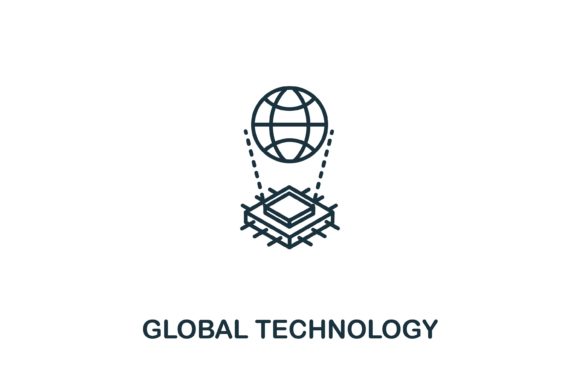
In an era defined by rapid digital transformation, the ability to communicate complex technical concepts through simple visual cues has become a cornerstone of effective design. The concept of Global Technology extends far beyond hardware and software infrastructure; it encompasses the universal visual language used to represent these advancements across borders and industries. Among the most critical assets in this visual lexicon is the Global Technology icon derived from artificial intelligence collections. These symbols serve as immediate cognitive anchors, allowing users to instantly recognize themes of connectivity, machine learning, and international digital integration without processing dense text.
For professionals ranging from web designers to corporate educators, the utility of these icons lies in their semantic clarity. A well-crafted simple line Global Technology icon strips away unnecessary ornamentation, focusing purely on the essential geometry of connection and intelligence. This minimalism is not merely an aesthetic choice but a functional necessity in responsive web design and scalable infographics. When representing abstract concepts like neural networks or global data streams, vector graphics provide the precision required to maintain integrity across all media formats, from massive conference banners to mobile application interfaces.
Technical Superiority of Vector Formats in Tech Design
Understanding the file architecture behind these design elements is crucial for maintaining professional standards. The availability of both EPS and JPG files addresses distinct needs within the creative workflow. While raster images like JPGs are ubiquitous for quick previews and web placeholders, they lack the mathematical flexibility required for high-end production. The EPS (Encapsulated PostScript) format remains the industry standard for editable vector graphics because it stores image data as geometric paths rather than pixel grids.
This distinction becomes paramount when working with Global Technology symbols. Technical diagrams often require resizing to fit various layout constraints. A vector-based EPS file allows a designer to scale a simple line icon from 16 pixels for a favicon to several meters for a trade show backdrop without any loss of fidelity or introduction of artifacts. Furthermore, the "easy to edit" nature of vector files means that stroke weights, node positions, and color values can be adjusted programmatically or manually in software like Adobe Illustrator or CorelDRAW. This adaptability ensures that the icon can be harmonized with specific brand guidelines, changing from a generic tech symbol to a proprietary asset that aligns perfectly with a company’s visual identity.
Strategic Applications Across Professional Sectors
The versatility of Global Technology icons makes them indispensable across a wide spectrum of use cases. Their application goes beyond mere decoration; they function as navigational aids, categorical markers, and storytelling devices.
- Web Design and User Interface: In modern UI/UX, cognitive load reduction is a primary objective. Simple line icons representing global tech or AI help users navigate complex dashboards and SaaS platforms intuitively. They act as visual signposts that guide user behavior more efficiently than text labels alone.
- Corporate Infographics and Reporting: Annual reports and white papers often struggle to visualize intangible assets like AI algorithms or global network reach. Vector icons provide a consistent visual metaphor that ties disparate data points together, making statistical information more digestible and engaging for stakeholders.
- Educational Materials and E-Learning: Educators and instructional designers utilize these symbols to create structured learning modules. A consistent icon set helps students mentally organize information, associating specific visual markers with topics like machine learning ethics, international data privacy, or cloud computing infrastructure.
- Marketing and Brand Identity: For businesses operating in the tech sector, these icons reinforce market positioning. Using a refined, professional Global Technology symbol signals competence and modernity, distinguishing a brand from competitors who may rely on outdated or overly complex clip art.
Balancing Abstraction and Recognition in Iconography
Designing or selecting the right Global Technology icon requires navigating the tension between abstraction and literal representation. An icon that is too abstract may fail to convey its intended meaning, while one that is too literal may become dated as technology evolves. The "simple line" style currently dominates this space because it achieves an optimal balance. By reducing the symbol to its fundamental contours—often combining a globe motif with circuit nodes or neural connections—designers create a timeless representation of Global Technology that remains relevant despite shifting trends.
This stylistic approach also supports accessibility standards. Clean lines with sufficient contrast ratios ensure that icons remain perceivable for users with visual impairments. Moreover, simplified geometry renders more clearly on low-resolution screens and in dark mode environments, where intricate details might otherwise get lost or create visual noise. When integrating these assets into templates or infographics, designers must consider the negative space around the icon as actively as the lines themselves, ensuring the symbol breathes within the layout and maintains its legibility at smaller sizes.
Workflow Integration and Customization Best Practices
Acquiring a high-quality EPS and JPG package is only the first step; effective implementation requires a disciplined workflow. Professionals should treat these icons as foundational components of a larger design system rather than isolated decorative elements. When downloading assets labeled as "easy to edit," it is vital to verify layer organization and path cleanliness. Well-constructed vector files will have named layers, closed paths, and minimal anchor points, which significantly reduces the time spent cleaning up artwork before customization.
Customization should always serve the context of the project. For instance, a cybersecurity firm might modify a standard Global Technology icon by adding shield elements or altering the line weight to convey robustness and protection. Conversely, an educational platform might soften the corners and use a lighter stroke to appear more approachable and less intimidating. The ability to manipulate the source EPS file empowers creators to derive multiple variations from a single master asset, ensuring visual consistency across diverse touchpoints while addressing specific contextual needs.
The Role of Standardized Assets in Collaborative Environments
In large organizations or distributed teams, standardized icon libraries play a critical role in maintaining brand coherence. When multiple designers work on different aspects of a product or campaign, access to a unified set of Global Technology vectors prevents stylistic fragmentation. Providing team members with both EPS masters for print and production work alongside JPG references for mockups and presentations streamlines communication. This dual-format delivery ensures that non-design stakeholders can view and discuss assets without needing specialized vector software, while designers retain full control over the final output quality.
Furthermore, the semantic tagging of these assets within digital asset management systems enhances discoverability. Labeling files with relevant terms such as "artificial intelligence," "global network," "connectivity," and "vector template" ensures that the right resources surface quickly during future projects. This organizational discipline transforms a simple icon download into a sustainable, long-term design resource that accumulates value over time.
Evaluating Quality and Relevance in Tech Visuals
Not all technology icons are created equal, and discerning quality is a key skill for professionals. When evaluating a Global Technology icon from an artificial intelligence collection, several factors determine its long-term viability. First, assess the conceptual accuracy: does the symbol genuinely reflect current understandings of AI and global tech, or does it rely on sci-fi tropes that undermine credibility? Authentic representations often incorporate motifs of distributed networks, data flow, or human-AI collaboration rather than generic robot heads or binary code.
Second, examine the technical execution. Even in simple line art, proportions matter. Consistent stroke widths, balanced composition, and alignment to pixel grids (for screen use) distinguish professional-grade vectors from amateur creations. A poorly constructed icon may look acceptable at large sizes but break down when scaled for mobile interfaces or printed at high resolutions. Finally, consider licensing and usage rights. Ensuring that the asset is cleared for commercial use, modification, and redistribution protects organizations from legal complications and supports the ethical consumption of creative resources.
Ultimately, the power of a Global Technology icon lies in its capacity to bridge the gap between sophisticated technological realities and human understanding. Whether used in a pitch deck, a software interface, or an academic paper, these visual tools translate complexity into clarity. By leveraging high-quality, editable vector assets, creators and professionals can communicate the essence of our interconnected, AI-driven world with precision, elegance, and universal resonance. The continued evolution of this visual language will undoubtedly mirror the advancement of the technologies it represents, making mastery of these design elements an enduring competency in the digital age.