Awards Icons: Elevating Visual Communication Through Meticulous Design
In the crowded landscape of digital and print media, visual shorthand has become the primary language of engagement. Among the most potent symbols in this visual lexicon are awards icons. These are not merely decorative clip-art elements; they are sophisticated signifiers of trust, achievement, quality, and recognition. When designers, marketers, and business owners integrate beautifully, meticulously designed awards icons into their projects, they are leveraging a psychological trigger that instantly communicates value to an audience. The relevance of these assets extends far beyond simple aesthetics. In an era where user attention spans are fragmented and trust is at a premium, high-quality iconography serves as an anchor, validating claims and guiding users through complex information hierarchies with immediate clarity.
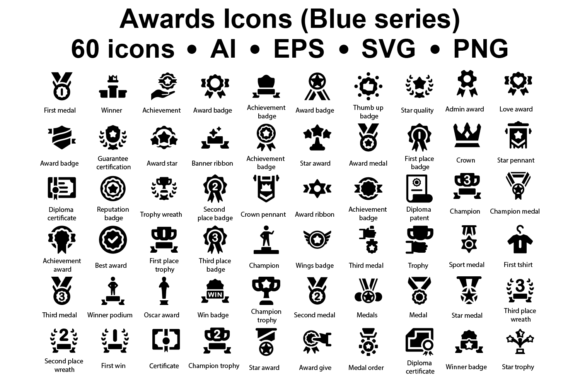
The modern creative workflow demands versatility. Professionals no longer design for a single medium. A campaign might launch on a responsive website, transition to a printed brochure, appear in a pitch deck presentation, and be repurposed for social media infographics. This cross-platform necessity has shifted how we evaluate design assets. It is no longer sufficient to have a static image. The current standard requires assets that are fluid, scalable, and editable. This is where comprehensive icon sets distinguish themselves from generic stock imagery. By providing fully editable AI and EPS files alongside transparent PNGs and SVGs, these resources align perfectly with the agile, multi-channel nature of contemporary design practices.
The Evolution of Recognition Symbols in Digital Interfaces
Historically, award imagery was often ornate, realistic, and heavily textured, mimicking physical trophies or medals. While this style still has its place in traditional ceremonial contexts, modern web and app design have necessitated a shift toward cleaner, more abstracted representations. Today’s users expect interfaces that load instantly and render crisply on high-density retina displays. Meticulously designed awards icons reflect this evolution by balancing symbolic weight with geometric simplicity. They retain the emotional resonance of a gold star or a laurel wreath while shedding unnecessary visual noise that can clutter a minimalist UI.
This shift is also driven by accessibility and inclusivity standards. Modern icon design prioritizes clear silhouettes and adequate contrast ratios, ensuring that symbols of achievement are recognizable to all users, including those with visual impairments. When selecting assets for a project, professionals must look beyond surface-level beauty to consider functional design. High-quality sets now account for these nuances, offering vectors that maintain integrity whether scaled down to a 16-pixel favicon or blown up for a trade show banner. This adaptability is crucial for maintaining brand consistency across diverse touchpoints, from mobile apps to large-format promotional materials.
Technical Versatility for Modern Workflows
The practical utility of a design asset is defined by its file formats. For developers and designers working in tandem, the inclusion of specific file types addresses distinct workflow needs. Understanding why each format matters helps maximize the value of these resources:
- SVG (Scalable Vector Graphics): This is the cornerstone of modern web development. SVGs are code-based, meaning they are infinitely scalable without losing resolution. More importantly, they can be styled with CSS, animated with JavaScript, and are inherently accessible when properly tagged. For responsive websites, SVG awards icons ensure that badges and accolades look sharp on any device while keeping page weight minimal.
- AI and EPS Files: These are the source files for deep customization. When a brand requires an award icon to match a specific color palette, line weight, or stylistic nuance, vector source files are non-negotiable. They allow illustrators to deconstruct and rebuild the icon, ensuring it feels like a bespoke part of the brand identity rather than a pasted-on afterthought. This editability is essential for creating cohesive illustration systems and custom infographics.
- Transparent PNG (256×256 pixels): Despite the dominance of vectors, raster formats remain vital for rapid prototyping, office presentations, and legacy software compatibility. A 256×256 pixel size strikes an ideal balance, offering enough resolution for clear display in PowerPoint decks or Word documents without being unwieldy. Transparency ensures these icons integrate seamlessly over colored backgrounds or photographs in promotional materials without unsightly white boxes.
Building Trust and Authority Through Visual Cues
The application of awards icons transcends decoration; it is a strategic tool for building E-E-A-T (Experience, Expertise, Authoritativeness, and Trustworthiness). In content marketing and e-commerce, users scan pages for validation signals before committing to reading text or making a purchase. A meticulously designed badge indicating "Top Rated," "Certified," or "Winner" acts as a cognitive shortcut. However, the quality of the icon directly influences the perceived quality of the endorsement. Pixelated, outdated, or generic clip-art can subconsciously signal amateurism, undermining the very authority it attempts to convey.
For entrepreneurs and business owners, investing in premium visual assets is an investment in brand equity. When presenting to stakeholders or clients, the polish of your slide deck matters. Beautifully crafted icons elevate the perceived professionalism of a proposal. Similarly, for educators and bloggers, using consistent, high-quality visuals helps structure long-form content, breaking up dense text and highlighting key takeaways. This improves readability and retention, making complex information more digestible. The trend toward visual storytelling means that even data-heavy reports now rely on icon-driven infographics to communicate metrics effectively.
Practical Applications Across Industries
The versatility of these icons makes them applicable to a wide spectrum of professional scenarios. Understanding these use cases helps creators leverage the assets more effectively:
- Website Development and UX: Use SVG icons to denote features, pricing tiers, or testimonials. Interactive hover states on award badges can provide additional context via tooltips, enhancing user engagement without cluttering the interface.
- Printed Marketing Collateral: Utilize AI/EPS files to create high-resolution brochures and flyers. The ability to adjust stroke widths ensures the icons remain legible even when printed at small sizes on business cards or packaging.
- Corporate Presentations: Drag and drop transparent PNGs into pitch decks to highlight milestones, partnerships, or employee achievements. Consistent styling across slides creates a narrative thread that reinforces organizational success.
- Social Media and Content Creation: Incorporate icons into Instagram carousels, LinkedIn articles, or YouTube thumbnails. Visual markers of achievement increase click-through rates and social sharing by signaling valuable content at a glance.
- Educational Materials: Gamify learning experiences with badge systems. Editable vectors allow educators to customize colors and labels to match curriculum themes, making recognition feel personal and meaningful to students.
Navigating Design Trends Without Sacrificing Timelessness
While it is important to stay current, awards and recognition are inherently tied to tradition and permanence. The challenge for designers is to navigate fleeting trends without creating assets that feel dated within months. Meticulously designed icon sets solve this by focusing on fundamental geometric principles rather than trendy effects like excessive gradients or skeuomorphism. This forward-looking yet realistic approach ensures longevity. A well-crafted trophy or ribbon icon should look as appropriate in five years as it does today.
Furthermore, the rise of AI-generated imagery has paradoxically increased the value of human-curated, meticulously crafted vector assets. While AI can generate images quickly, it often struggles with the precise consistency, clean topology, and editability required for professional production work. Designers and agencies continue to prefer hand-tuned vector packs because they offer reliability and control that generative models cannot yet guarantee. Having a library of fully editable source files provides a safety net, allowing creatives to fix, adapt, and refine assets to meet exact client specifications without starting from scratch or wrestling with unpredictable generation outputs.
Maximizing Value in Creative Projects
To truly benefit from these resources, users should adopt a systematic approach to asset management. Organizing files by format and category streamlines the design process. Establishing a internal style guide that dictates which icon variations to use for specific contexts prevents visual inconsistency. For teams, sharing the editable source files ensures that everyone can adapt the assets to their specific needs without requesting custom work from a lead designer.
Ultimately, the goal is seamless integration. Awards icons should enhance the message, not distract from it. By choosing meticulously designed assets that offer technical flexibility through AI, EPS, SVG, and PNG formats, professionals equip themselves with tools that respect both the aesthetic and functional demands of modern projects. Whether you are a freelancer polishing a portfolio, a marketer launching a campaign, or an educator recognizing student effort, these icons provide the visual vocabulary needed to communicate excellence clearly and beautifully. Enjoy the process of elevating your work with assets that are as functional as they are inspiring, and let the quality of your visuals reflect the quality of your achievements.