Hologram: Elevating Visual Communication with Simple AR Line Art
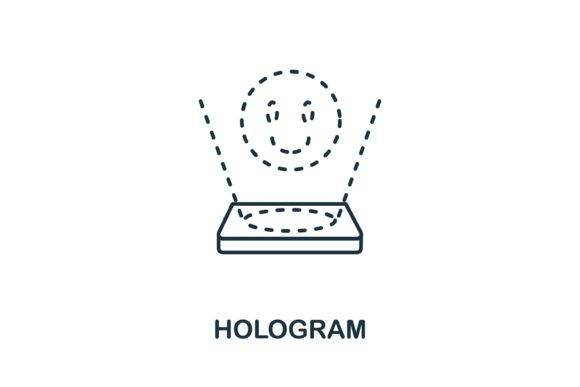
In the rapidly evolving landscape of digital design, clarity often matters more than complexity. When creators search for a Hologram asset today, they are rarely looking for a photorealistic render of science fiction technology. Instead, they are seeking a clean, recognizable symbol that instantly communicates innovation, augmented reality, or futuristic interface concepts without cluttering the canvas. This specific type of hologram icon—characterized by simple line elements and vector precision—serves as a functional bridge between abstract tech concepts and user understanding.
The true value of this graphic lies in its versatility. A well-designed hologram symbol acts as visual shorthand. Whether you are building a landing page for a SaaS startup, creating an infographic about 5G technology, or designing educational materials on optics, this single element can anchor your entire visual narrative. Because it is delivered as both an EPS and JPG file, it fits seamlessly into workflows ranging from high-end print production to quick social media updates, ensuring that the message remains consistent across every touchpoint.
Why Minimalist Line Icons Outperform Complex Renders
There is a practical reason why simple line element hologram symbols have become a staple in modern web design and infographics. Complex, shaded 3D renders often compete with text for attention and can slow down page load times when used in web environments. In contrast, a minimalist vector hologram integrates harmoniously with typography and whitespace.
For UI/UX designers, this distinction is critical. When designing an app interface that features AR capabilities, the icon needs to be legible at small sizes. A detailed holographic projection might turn into a muddy blob when scaled down to 24 pixels for a navigation bar. A simple line-based symbol retains its integrity, ensuring users immediately recognize the function. This scalability is exactly why having the source EPS file is non-negotiable for professional work; it allows you to adjust stroke weights and proportions to match your specific brand guidelines without losing quality.
Practical Applications Across Industries
The utility of a hologram icon extends far beyond tech blogs. Different professionals leverage this asset to solve distinct communication challenges in their daily work.
Digital Marketing and Web Design
Marketers frequently need to visualize intangible services. If you are promoting cloud computing, virtual showrooms, or remote assistance tools, a hologram icon provides an immediate mental hook. On a pricing table or feature list, placing this symbol next to "Virtual Preview" or "AR Try-On" reduces cognitive load. Users do not have to read the description to understand the category; the icon does the heavy lifting. For freelancers building portfolio sites, using this graphic signals technical competency and awareness of current trends without requiring expensive custom illustration work.
Education and Training Materials
Educators and corporate trainers face the challenge of explaining spatial concepts on flat screens. When creating slide decks or e-learning modules about medical imaging, engineering schematics, or historical reconstructions, a hologram symbol serves as a cue that the content involves 3D visualization. It prepares the learner’s mindset for interactive or spatial content. In printed textbooks or worksheets, the black-and-white compatibility of a line-art hologram ensures it looks crisp even when printed on standard office printers, unlike gradient-heavy graphics that often band or print poorly in grayscale.
Small Business and Entrepreneurship
Entrepreneurs often wear multiple hats, acting as their own creative directors. When pitching to investors or creating internal documentation, professional visuals build credibility. A startup founder creating a pitch deck for a new retail tech solution can use the hologram icon to represent future roadmap items or prototype features. The included JPG file makes this accessible for those who may not own Adobe Illustrator but still need to drop a polished graphic into PowerPoint, Canva, or Keynote. It bridges the gap between amateur presentation design and agency-level polish.
Understanding the File Formats: EPS vs. JPG
Receiving both EPS and JPG files is not just a bonus; it is a workflow necessity. Understanding when to use each format determines the success of your project.
- The EPS File: This is your master copy. As a vector format, it is mathematically defined rather than pixel-based. You should use this file whenever you need to resize the hologram for large-format printing like trade show banners, vehicle wraps, or storefront signage. It is also essential if you need to change the color to match your brand palette or modify the line thickness. Designers working in Illustrator, Affinity Designer, or CorelDRAW will rely exclusively on this version.
- The JPG File: This is your deployment copy. It is rasterized and ready for immediate use in non-design software. Use this for email signatures, Word documents, basic website uploads, or social media posts where transparency and infinite scaling are not required. Having a pre-rendered JPG saves time when you need a quick visual reference and do not want to open heavy design software.
Critical Considerations Before Implementation
While a hologram icon is a powerful tool, applying it effectively requires some forethought. Before downloading or integrating this asset into your next project, consider the context of your audience and medium.
Semantic Consistency: Ensure the hologram symbol aligns with the rest of your icon set. If your other icons are filled and solid, introducing a thin-line hologram might create visual dissonance. Conversely, if your design system relies on outline styles, this asset will feel native. Always check stroke width consistency across your library to maintain a cohesive look.
Cultural and Contextual Clarity: While "hologram" is a widely understood term in tech circles, ensure your specific audience associates the symbol with the intended meaning. In some contexts, a hologram icon might imply security (like on a credit card) rather than augmented reality. Pairing the icon with clear microcopy or labels helps eliminate ambiguity. Never assume the symbol speaks entirely for itself; use it to support your text, not replace it.
Licensing and Usage Rights: Always verify the license terms associated with the download. Just because a file is easy to edit does not mean it is free for all commercial applications. Confirm whether attribution is required or if there are limitations on redistribution, especially if you are incorporating the hologram into a template or product you intend to sell to others.
Enhancing User Experience Through Visual Cues
Ultimately, the decision to use a hologram icon should be driven by user experience goals. In an era of information overload, users scan interfaces rather than reading them word-for-word. A distinctive, simple line element acts as a waypoint, guiding the eye and organizing information hierarchy.
For content creators writing about emerging technologies, this icon breaks up dense text blocks and provides visual relief. For business owners, it modernizes legacy branding without requiring a full rebrand. The accessibility of having both editable vector sources and ready-to-use raster images democratizes high-quality design, allowing anyone from a hobbyist blogger to a marketing director to communicate complex ideas simply.
When selected and applied with intention, a hologram symbol is more than just decoration. It is a functional component of visual language that clarifies, engages, and informs. By focusing on the practical application of this asset rather than its novelty, you ensure that your designs remain effective, relevant, and genuinely useful to the people viewing them.