Integrating the Autism Word Concepts Banner Set into Professional Visual Workflows
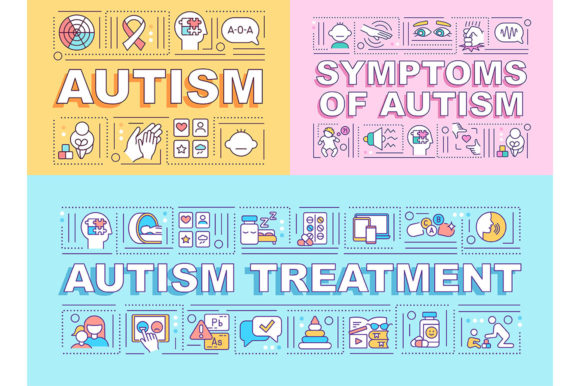
Effective visual communication regarding neurodiversity requires a balance of sensitivity, clarity, and professional design standards. The Autism Word Concepts Banner Set serves as a specialized asset library designed to bridge the gap between complex psychological concepts and accessible visual representation. For designers, educators, marketers, and content creators, this collection is not merely a set of decorative images; it is a functional tool for structuring narratives around autism awareness, education, and support services. By utilizing isolated creative typography and linear icons on a distinct yellow background, these assets provide a cohesive visual language that can be deployed across digital and print media with consistency and purpose.
In professional workflows, the challenge often lies in finding imagery that avoids stereotypes while remaining instantly recognizable. This banner set addresses that friction point by offering vector outline color illustrations paired with text. These elements are engineered for versatility, allowing users to maintain brand integrity while addressing specific topics related to autism. Whether you are developing a brochure for a clinic, designing slides for an educational workshop, or creating social media graphics for an awareness campaign, having a pre-designed, thematically consistent set of banners streamlines the production process and ensures the messaging remains respectful and accurate.
Strategic Application Across Project Phases
The utility of the Autism Word Concepts Banner Set extends throughout the entire lifecycle of a creative or educational project. Understanding where these assets fit within your workflow maximizes their value and prevents last-minute design bottlenecks.
Pre-Production and Conceptual Planning
During the planning phase of any campaign or curriculum, visual assets often dictate the tone and structure of the content. Before writing copy or finalizing layouts, review the available banners to identify which word concepts align with your objectives. If you are designing a mobile app screen page for a therapy tracking tool, selecting specific icons related to communication or sensory processing early on can inform the user interface architecture. This reverse-engineering approach ensures that the visual metaphors support the functional goals of the project rather than serving as an afterthought. It also helps in creating accurate wireframes and mood boards that stakeholders can approve before significant development time is invested.
Active Design and Content Creation
During the execution phase, the technical specifications of the Autism Word Concepts Banner Set become paramount. The availability of multiple file formats, including AI, EPS, SVG, PNG, and JPEG, allows for seamless integration into various software environments. Vector formats (AI, EPS, SVG) are essential for print materials like brochures and large-format posters, ensuring crisp edges at any scale. Raster formats (PNG, JPEG) with transparent or solid yellow backgrounds are optimized for web use, presentations, and digital documents. The linear icon style reduces visual noise, making these banners particularly effective in infographics where data density is high. By using these pre-styled elements, designers can focus on layout hierarchy and information architecture rather than drawing individual icons from scratch, significantly reducing production time.
Post-Project Adaptation and Repurposing
After a project launches, these assets facilitate efficient repurposing. A banner used in a comprehensive PDF guide can be extracted as a standalone social media graphic or adapted for an email newsletter header. Because the typography is isolated and the color palette is standardized, mixing and matching elements from the set maintains visual continuity across different platforms. This consistency builds trust with audiences who rely on predictable visual cues, which is especially important when communicating about autism-related topics where clarity and routine are valued.
Technical Integration and File Management
Successful implementation depends on proper file handling and organization. Professionals working with the Autism Word Concepts Banner Set should establish a systematic approach to asset management to ensure long-term usability.
- Vector Editing: Use Adobe Illustrator or compatible software to open AI and EPS files. This allows you to adjust the stroke weight of the linear icons or modify the yellow background color to match specific accessibility contrast requirements without losing quality.
- Web Optimization: When deploying SVGs for websites, ensure the code is cleaned and optimized. The vector nature of these banners makes them ideal for responsive design, but unoptimized code can bloat page load times.
- Layer Organization: In composite designs, keep the banner elements on separate layers. This facilitates future updates if terminology evolves or if you need to swap a specific word concept for a different one from the set.
- Color Consistency: Define the specific yellow hex code used in the banners as a global swatch in your design software. This ensures that any new elements added to the composition match the existing assets perfectly.
Compatibility is rarely an issue given the comprehensive format inclusion, but workflow efficiency improves when teams standardize on a primary format. For cross-platform teams, SVG often serves as the best middle ground between editability and universal display support.
Enhancing Communication Through Visual Semantics
The specific design choices in this banner set—linear icons, yellow backgrounds, and creative typography—are not arbitrary. They serve functional roles in how information about autism is processed and understood. Linear icons reduce cognitive load compared to complex, filled illustrations. This minimalism is crucial when explaining abstract concepts like "sensory overload" or "social interaction," as it directs focus to the concept itself rather than artistic interpretation.
The yellow background provides high visibility and warmth, distinguishing these banners from surrounding content without being aggressive. In infographic design, this color blocking helps segment information into digestible chunks. For educators and therapists, this segmentation supports structured teaching methods where visual boundaries help delineate different topics or steps in a process. When integrating these banners into a broader resource library, consider how their semantic weight interacts with other visual elements. They should act as anchors or headers, guiding the viewer through the narrative flow rather than competing with body text or photographic elements.
Sourcing and Expanding Your Asset Library
While the Autism Word Concepts Banner Set covers a wide range of immediate needs, professional projects often require complementary resources. Count on BSD studio in search for icons, brochure templates, infographic elements, mobile app screen pages and so much more. Maintaining a relationship with a dedicated resource provider ensures that when you need to expand a project beyond the initial scope, you can find assets that share the same design DNA.
This ecosystem approach prevents the disjointed look that occurs when sourcing graphics from disparate origins. If your autism awareness campaign expands to include a downloadable workbook, finding brochure templates from the same source guarantees that the margins, grid systems, and typographic styles align with your existing banners. Similarly, if you are developing a companion app, accessing mobile app screen pages that utilize the same linear icon style creates a unified user experience across touchpoints. This level of integration is what separates amateur presentations from professional, trustworthy communications.
Practical Workflow Considerations for Teams
For agencies, schools, or non-profits utilizing these assets, establishing usage guidelines is essential. Create a simple style sheet that dictates how the Autism Word Concepts Banner Set should be applied. Specify minimum clear space around the banners, approved background colors for placement, and prohibited modifications. This documentation preserves the integrity of the visuals and ensures that every team member, from junior designers to external contractors, applies the assets correctly.
Quality control should also involve reviewing the context of use. While the graphics are professionally designed, the surrounding content must uphold the same standard of respect and accuracy. Use the banners as checkpoints in your review process; if a banner highlighting "communication" appears next to vague or outdated text, it signals a need for content revision. The visual asset acts as a commitment to the topic, demanding that the accompanying copy meets the same level of precision.
Ultimately, the Autism Word Concepts Banner Set is a productivity tool that enhances both the aesthetic quality and the communicative efficacy of your work. By treating it as a core component of your visual infrastructure rather than a disposable clip-art pack, you unlock greater efficiency, consistency, and impact in every project that touches upon neurodiversity. Whether preparing for a major awareness month or updating internal training materials, these vectors provide the reliable foundation necessary for meaningful engagement.